



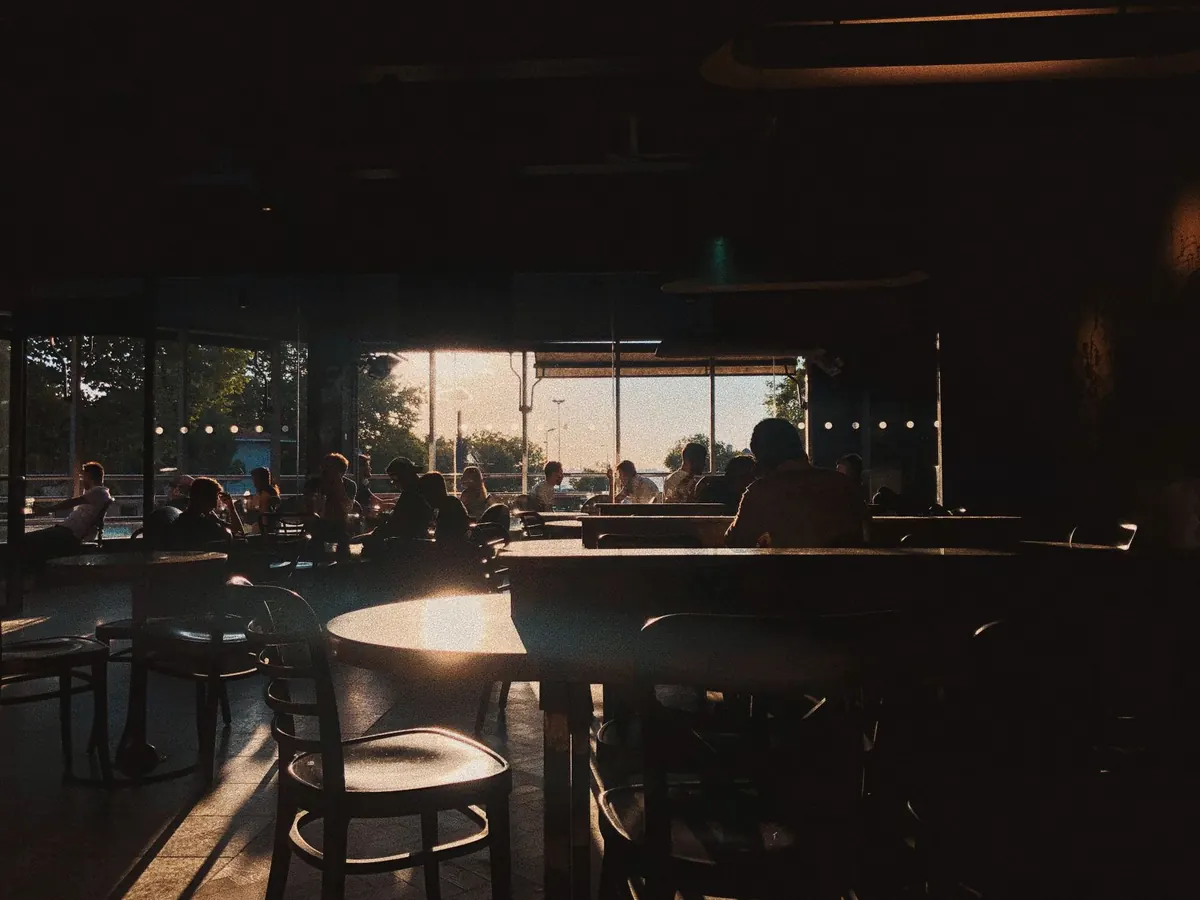
There is a particular quiet that settles on a pub back room when someone is telling a story well. Glasses stop moving. Someone at the far end leans in. A person who came in for one pint stays for the second half. Making that happen costs very little: a room, half a dozen tellers, and thirty or forty people who fancied something different on a Thursday.
Hosting a storytelling night is not complicated, but it rewards a bit of thought. This is how to plan one, fill it, run it, and keep the audience with you from the first word to the last.
Decide What Kind of Night You Are Running
Before you book anything, settle the format. There are three broad shapes, and each asks something different of the person holding the microphone.
- Open mic. Anyone can put their name down. Easy to fill, unpredictable in quality, and it puts real weight on the host to keep things moving.
- Curated. You invite the tellers. More work beforehand, a stronger evening on the night, and a much gentler job for whoever is hosting.
- Themed. “Stories about weather.” “Things that went wrong on holiday.” “The job I should never have taken.” A theme gives newcomers permission to speak and gives you a line for the posters.
For a first night, a short curated line-up with one open slot works well. You get a reliable spine of tellers and still leave the door open for a stranger with a good one. Think, too, about whether you are mixing in music or poetry. A mixed bill fills a room more easily, but three songs in the middle of a storytelling evening changes the mood. If you want a storytelling night, keep it a storytelling night.
Find a Room That Wants You
Approach venues on the nights they are quietest — Monday to Wednesday, usually — when a landlord or hall committee is glad of the custom and the space. A back room, an upstairs function room or a community hall all work. What matters is a door that closes, chairs that can be arranged in a rough semicircle, and a corner that can serve as a stage.
Sort these details before you announce a date. Is there a microphone and a small PA, or do you need to borrow one? What time does the music start in the main bar, and will it bleed through the wall? Can you get in an hour early to set up? Does the hall need a deposit, a keyholder, or someone to lock up afterwards? For a first event, aim for a room that feels comfortably full at thirty people rather than echoingly empty at eighty.
Build a Line-Up of Five or Six
Four to six tellers is a good number for an evening of roughly two hours. Ask each for a story of seven to ten minutes, and be specific about the time. Vague invitations produce twenty-minute performances and a restless audience.
Look for a mix: one or two experienced tellers, two or three people who have never done it before, and someone with a funny story to balance anything heavy. Ask people to know their story rather than read it — a story that has been told aloud twice at a kitchen table will land better than one read from a phone. Line up a reserve teller as well. Someone always drops out on the day.
What to tell a nervous first-timer
- Start somewhere in the middle of the action, not with three minutes of background.
- One story, one person telling it. Resist the urge to explain the moral at the end.
- Learn the shape — the opening image, the turn, the ending — not a word-for-word script.
- Pause. Silence feels enormous to you and perfectly natural to everyone listening.
The Running Order That Keeps a Room Awake
Two halves with an interval beats one long stretch. Ears tire after forty minutes, and a break lets people buy a drink, which the venue will remember when you ask to come back.
- Doors open. Thirty minutes for arrivals, drinks and settling in.
- Welcome. Three minutes from the host: what the evening is, how long it runs, phones away.
- First half. Three tellers, strongest and shortest first.
- Interval. Fifteen to twenty minutes. Announce clearly when you restart.
- Second half. Two or three tellers, ending with your best.
- Close. Thank the tellers by name, mention the next date, let people drift.
Start on time even if the room is half full, and finish when you said you would. A night that overruns by forty minutes loses you the venue and half the audience.
Publicity: One Clear Sentence, Repeated Often
You do not need a marketing plan. You need a plain sentence that says what, where, when and whether it costs anything, put in front of people who live nearby. Local Facebook groups, the parish newsletter, the library noticeboard, the coffee shop window, a workplace email chain, the WhatsApp group for your street — all of them work.
Ask every teller to invite three people personally. That is a real audience before a single poster goes up. Ask the venue to mention it on their own channels too, and put a date on the wall for the following month while people are still in the room. Word of mouth is the engine that carries a night from fifteen people to fifty.
If you plan to charge on the door, agree with the venue in advance how the money is handled, and check whether any permission is needed for a public performance — your local authority can advise. Free entry with a donations tin at the back is simpler for a first outing.
Hosting the Room
As host, you are the temperature of the evening. Greet people at the door. Learn three names. Say one warm sentence about what is coming and then get out of the way. A short opening that sets the contract — listen, no phones, nobody needs to be brilliant — does more for a night than any amount of clever banter.
Keep the audience involved without turning it into a workshop. Before the interval, take a handful of one-line stories from the floor: a bus journey, a bad haircut, a forgotten anniversary. Hand a prompt card to each table and ask them to write a single true sentence they would never have told anyone. Read a few out after the break, with permission. It turns a room of strangers into a room of participants.
If a teller starts to lose the room, resist diving in — an interruption mid-story is worse than a flat patch. Catch their eye and gesture gently at your watch if you must. Afterwards, thank them loudly and mean it. And if a loud corner in the bar is spoiling things, have a word with the staff beforehand so the fix is already agreed.
Your First Night: A Short Checklist
- Date, venue and time confirmed in writing, including set-up and finish times.
- Four to six tellers briefed on length, plus one reserve.
- A microphone, a spare cable and an extension lead that actually reaches.
- Someone on the door with a list, a tin and a pen.
- Publicity out two weeks ahead, with a reminder three days before.
- The next date ready to announce while the room is still warm.
Your first storytelling night will not be perfect. Someone will go on too long, the microphone will hum, and you will forget a name. None of it matters very much. What people remember is the hour they sat in a warm room and listened properly to another human voice. Book the second date before the first one is over.
Photo: Dilan Ceviz / Pexels
Related posts
More stories you’ll love reading